Clear UV Resin is no longer limited to small craft projects. It now supports jewelry making, protective coatings, dental models, electronics encapsulation, and desktop 3D printing. Its transparent finish can preserve tiny details, glossy surfaces, and embedded objects. Yet “clear” does not always mean perfectly colorless.
Grand View Research reported that the global UV curing resins market was valued at approximately USD 7.4 billion in 2023. The report also identifies growing demand for fast-curing, low-waste coating technologies. MarketsandMarkets similarly expects continued expansion through 2029, driven by electronics, automotive, packaging, and additive manufacturing. These figures describe UV curing resins broadly, not Clear UV Resin alone. That distinction matters.
Dr. John F. Kinstle, a recognized UV-curing specialist and author of technical training materials, describes UV curing as “a photochemical reaction initiated by ultraviolet energy.” This principle explains the material’s speed. Under a suitable 365–405 nm lamp, liquid resin can become a hard, transparent solid within minutes. However, pigment, thickness, lamp intensity, surface oxygen, and exposure angle can change the result. A thick pendant may look clear outside but remain soft inside. A polished surface may still develop yellowing over time.
This guide examines what Clear UV Resin is, how it cures, and where it performs reliably. It also addresses practical limits that product descriptions often overlook. Real results depend on testing. Not marketing claims.
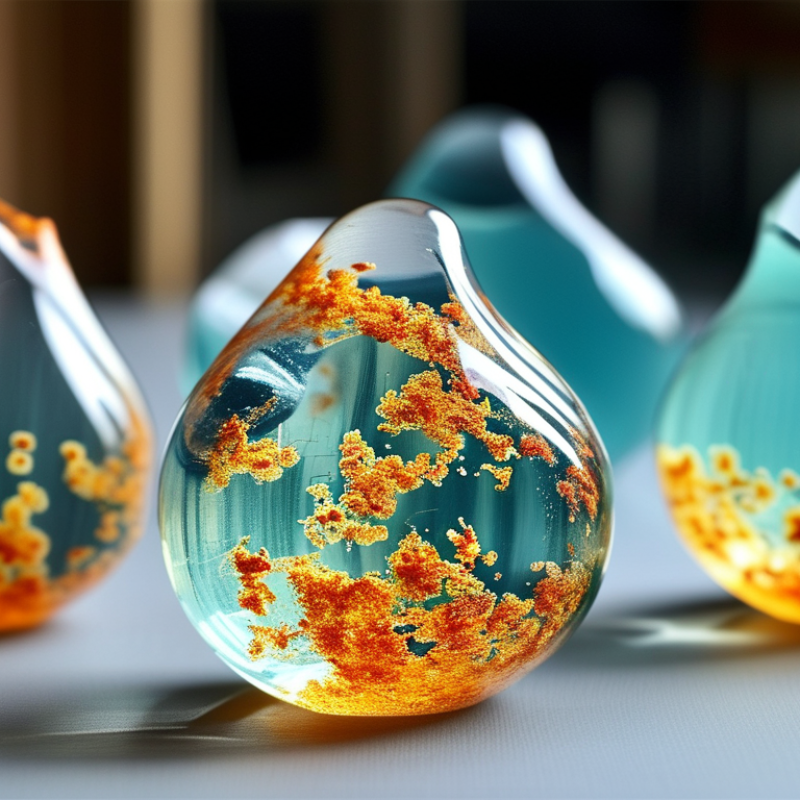
Clear UV resin is a transparent liquid photopolymer that hardens when exposed to ultraviolet light. Unlike two-part resin, it does not require a separate hardener. Its curing process begins when UV energy activates light-sensitive compounds inside the resin.
It starts as liquid. Thin layers cure best. Makers use clear UV resin for small jewelry pieces, decorative charms, miniature models, embedded images, and glossy surface coatings.
It can preserve dried flowers, add depth to flat designs, or create a glass-like finish over craft projects. In practical use, a strong UV lamp helps the resin cure more evenly, especially in detailed molds. Sunlight may work, but its intensity changes with weather and time.
Clear resin is not automatically flawless. Thick pours can remain soft underneath, develop bubbles, or turn slightly yellow over time. I have found that careful mixing, slow pouring, and short curing intervals produce more reliable results than rushing the process. Dust is another overlooked problem; one tiny particle can remain visible in a transparent surface. Work in a clean, ventilated area, wear suitable gloves and eye protection, and avoid skin contact with uncured resin. Always follow the resin’s technical instructions, because curing wavelength, exposure time, and maximum layer thickness can vary.
What Is Clear UV Resin and What Is It Used For?
How Does Clear UV Resin Cure?
Clear UV resin is a liquid photopolymer that hardens under ultraviolet light. It is often used for small decorative casts, jewelry details, domed surfaces, and transparent protective coatings. Unlike two-part resin, it does not require mixing before application. Its curing behavior depends heavily on light exposure, resin thickness, and surface cleanliness.
Most clear UV resins contain photoinitiators. These compounds react when exposed to a suitable UV wavelength, commonly within the 365–405 nanometer range. The reaction creates active molecules that link the resin into a solid plastic network. The lamp must reach the resin directly. Shadows, deep cavities, and cloudy additives can leave hidden areas soft.
Light intensity matters. A thin layer may cure within a few minutes, while a thicker pour needs several short exposures. Excessive heat can cause bubbles, yellowing, or surface distortion. Oxygen can also interfere with the outermost layer, leaving a slightly sticky finish. A final exposure may help, but it does not always fix poorly cured material beneath.
In workshop testing, rotating the piece often improves evenness. I once treated curing time as a fixed number, which was too simplistic. Clear resin can look hard while remaining flexible inside. Check the surface, edges, and underside before handling it extensively. Work with gloves and ventilation, and follow the product’s stated lamp requirements.
| Data Dimension | Typical Data | Practical Details |
|---|---|---|
| Material Type | Single-component photopolymer resin | Clear UV resin is a liquid polymer formulation that hardens through light-activated polymerization. It normally does not require a separate two-part mixing process before use. |
| Appearance Before Curing | Transparent, colorless to slightly amber liquid | The liquid may look clear, pale yellow, or slightly cloudy depending on its formulation, storage age, pigments, and additives. |
| Curing Mechanism | Light-triggered cross-linking | Photoinitiators absorb ultraviolet or near-ultraviolet light and start a chemical reaction that links liquid resin molecules into a solid polymer network. |
| Common Lamp Wavelength | Approximately 365–405 nm | The correct wavelength depends on the photoinitiator system. A lamp should be compatible with the resin’s technical instructions rather than selected by wattage alone. |
| Typical Cure Time | About 1–10 minutes per thin layer | Cure time varies with layer thickness, lamp intensity, wavelength, distance, resin color, temperature, and the shape of the object. Clear, thin layers generally cure faster than opaque or thick sections. |
| Recommended Layer Thickness | Thin layers, commonly 1–3 mm | Applying resin in thin layers improves light penetration and reduces trapped liquid, overheating, surface wrinkling, and incomplete curing. |
| Surface Finish | Glossy and transparent when fully cured | A smooth, dust-free surface can remain glass-like. Sanding, polishing, or applying a final thin coat may improve clarity and reduce minor surface defects. |
| Main Uses | Crafts, jewelry, coatings, repairs, and small decorative parts | Common applications include doming stickers, sealing artwork, coating small components, making jewelry elements, embedding decorative items, filling shallow gaps, and creating glossy protective layers. |
| Suitable Embedded Items | Dry decorations and small lightweight objects | Glitter, dried flowers, foil, small charms, and flat decorative elements can be embedded in layers. Moisture-containing materials may cause bubbles, cloudiness, or poor curing. |
| Oxygen Inhibition | Possible slightly tacky surface | Oxygen at the surface can interfere with complete polymerization, leaving a sticky film. An additional cure, a compatible clear topcoat, or curing under a suitable transparent covering may help. |
| Factors That Reduce Cure Quality | Excessive thickness, pigments, low temperature, weak light, and contamination | Dark colors and dense fillers absorb or block light. Dust, oil, water, and an incompatible lamp can also produce soft, cloudy, or uneven results. |
| Curing Indicators | Firm surface, reduced odor, and no liquid movement | A cured layer should not remain visibly liquid or deform easily under light pressure. A hard surface alone does not guarantee that a thick object is fully cured internally. |
| Shrinkage and Heat | Some volumetric shrinkage and heat during curing | Polymerization can release heat and cause dimensional change. Thin, gradual applications help limit cracking, warping, bubbles, and excessive exothermic heat. |
| Storage Conditions | Cool, dry, dark, and tightly sealed | Keep the container away from sunlight, UV lamps, heat, moisture, and children. Light exposure can slowly initiate curing inside the container and shorten usable life. |
| Handling Precautions | Use gloves, eye protection, ventilation, and proper waste handling | Uncured resin can irritate skin and eyes and may cause sensitization. Avoid skin contact and inhalation of vapors. Follow the product safety data sheet and fully cure liquid residues before disposal where permitted. |
Note: The values shown are general working ranges for clear UV-curable resin. Actual curing performance depends on the specific formulation, lamp, application thickness, and environmental conditions.
What Is Clear UV Resin and What Is It Used For?
Clear UV resin is a liquid material that hardens when exposed to ultraviolet light. It creates a glossy, transparent finish for small creative and repair projects. In practice, I find it useful when speed and surface clarity matter more than large-scale strength.
What are the main uses of clear UV resin? Many crafters use it for pendants, earrings, keychains, charms, and miniature decorations. It can preserve dried flowers, tiny photographs, glitter, or other lightweight inclusions. A thin layer also works well as a protective coating on handmade pieces. It adds shine and helps reduce minor scratches. However, thick pours may cure unevenly, leaving a soft center or trapped bubbles.
Clear UV resin is also used for filling shallow gaps and creating raised details. Artists can apply it with a fine tool, cure each layer, and build controlled shapes. Small molds are suitable, but deep molds may require a different resin type. Good ventilation, gloves, eye protection, and careful handling are essential. Uncured resin can irritate skin, so contact should be avoided. Cure time depends on lamp strength, layer thickness, pigment, and the resin formula. I once assumed a brighter lamp always meant better results, but surface distance mattered more than expected. Yellowing can also occur over time, especially under heat or sunlight.
Clear UV resin is a transparent, light-curable polymer that hardens when exposed to ultraviolet light, commonly around 365–405 nm. The chart shows typical curing wavelengths used for common applications.
Clear UV resin is commonly used for jewelry and craft pieces, miniature models, protective coatings, small repairs, and electronic encapsulation. Thin applications generally cure more evenly because UV light can penetrate the material more effectively.
Clear UV resin needs more than a bottle and a lamp. Prepare a silicone mat, nitrile gloves, safety glasses, mixing cups, wooden sticks, tweezers, a small digital scale, and a dust cover. Use a UV or UV-LED lamp matched to the resin’s curing range. A 365–405 nm lamp is common, but the label should decide.
Keep the workspace bright, level, and ventilated. A small air filter can reduce odor, though it does not replace ventilation. Industry testing guidance from RadTech emphasizes controlled UV exposure and suitable curing conditions for reliable results. A 2024 Grand View Research analysis also projects strong growth in UV-curing technologies, partly because they reduce processing time and energy use. That growth does not make every home setup safe.
Use disposable liners for spills, absorbent wipes, and a sealed container for contaminated materials. Never touch uncured resin with bare skin. Cured pieces may still have a tacky surface, so wipe them with the recommended cleaning liquid before a second light exposure. I usually test a few drops first. It saves material. More importantly, it reveals weak curing, bubbles, or unexpected yellowing. Resin instructions can be vague, and lamp power is not always comparable between tools. That is where careful records help: note exposure time, layer thickness, and surface temperature.
Clear UV resin is a liquid material that hardens under ultraviolet light. Crafters use it for jewelry, small molds, decorative coatings, and surface repairs. It can create a glass-like finish over dried flowers, artwork, or tiny embedded objects. However, its clarity should not be mistaken for harmlessness.
Work in a well-ventilated area with a stable, covered surface. Wear nitrile gloves and protective eyewear, especially when pouring or cleaning spills. Avoid touching your face, food, phone, or door handles during the process. Uncured resin may irritate skin and eyes. If contact occurs, follow the product’s safety instructions and seek medical advice when needed.
Use thin layers whenever possible. Thick pours can become hot, bubble, or cure unevenly. A short curing cycle may look complete while the center remains sticky. Check the surface carefully before handling it. Keep resin away from children, pets, flames, and direct sunlight. Store it tightly closed in a cool, shaded place. I once overlooked the workspace floor; a small drip can spread farther than expected.
Tips: Place tools on disposable covers, keep paper towels nearby, and clean spills promptly. Do not wash liquid resin into drains. Harden leftover material fully before disposal, according to local waste guidance. A dust mask may not protect against chemical vapors, so ventilation matters more than relying on one item of equipment. Safety is not complicated, but it is easy to rush.
Clear UV resin hardens under ultraviolet light. It suits pendants, earrings, keychains, charms, and miniature decorations. It leaves a glossy, transparent surface.
Yes, it can cover dried flowers, tiny photographs, glitter, and other lightweight items. Keep inclusions thin and dry. Moisture may create cloudy areas or bubbles.
A thin coating adds shine and helps reduce minor scratches. Apply it gradually with a fine tool. Thick coatings may remain soft underneath.
Small, shallow molds usually work better. Deep molds can cure unevenly. The center may stay sticky or trap bubbles.
Place the project on a covered, stable surface. Apply thin layers and cure each layer separately. Check the surface before adding more resin.
Work in a well-ventilated area. Wear nitrile gloves and protective eyewear. Avoid touching your face, phone, food, or door handles.
Uncured resin may irritate skin and eyes. Avoid contact whenever possible. Follow the material’s safety instructions and seek medical advice when needed.
Keep paper towels nearby and clean spills promptly. Do not wash liquid resin into drains. Harden leftover material fully before disposal, following local guidance.
Heat and sunlight can cause yellowing over time. Thick layers, pigments, weak curing, or excessive lamp distance may leave soft areas. I once blamed the lamp, but distance mattered more. Mistakes happen.
Clear Uv Resin is a transparent, liquid photopolymer material that hardens when exposed to ultraviolet light. Unlike resins that require mixing several components, it is generally ready to use, making it convenient for small creative and repair projects. During curing, UV energy triggers a chemical reaction that transforms the liquid resin into a solid, glossy, and durable surface. Curing time depends on the thickness of the layer, the strength of the UV light, and the transparency of the project.
Common uses include jewelry making, decorative crafts, miniature details, surface coating, filling small gaps, and creating transparent effects. Basic supplies may include the resin, a UV lamp, protective gloves, mixing tools, molds, colorants, and a clean, level work area. Safe use is essential: work in a well-ventilated space, avoid direct skin and eye contact, wear suitable protective equipment, follow curing instructions, and keep the material away from heat and unauthorized users. Uncured resin should be handled carefully and disposed of according to local requirements.

Ever Ray